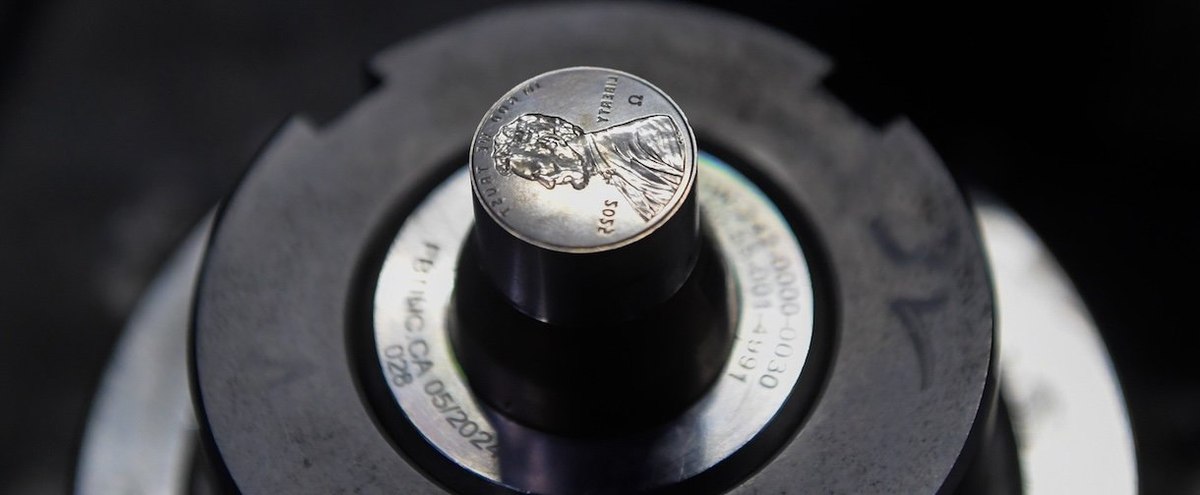

The United States minted its last penny for circulation on November 12, 2025. While pennies can still be legally used for purchases in the U.S., the government will produce no new pennies for the general public. (Future production will be limited to special collectors' items.) That makes the U.S. the latest country — following others such as Australia, New Zealand, and Canada — to decide that one-cent coins are no longer worth producing.
Our February poll found that more Americans supported than opposed eliminating the penny at a time when the idea was being floated by Donald Trump's administration. A new YouGov poll, on the other hand, finds that opposition to eliminating the penny has grown and that Americans are now about evenly split. However, part of this shift may come from ambiguity about what it means to eliminate the penny. Larger shares of Americans support ending production of the penny while smaller shares support removing the penny from circulation — based on asking about both separately.
We also find some support for the rationales behind eliminating the penny. Awareness of the costs of penny production has grown, and Americans say they have more pennies than other coins but spend them less often.
Looking ahead to a post-penny country, Americans are split between thinking that sellers should round prices to the nearest five cents or should always round down prices, while mostly opposing the rounding up of prices.
As production ends, are Americans warming to the penny?
In February, we found that more Americans supported eliminating the penny than opposed its elimination. Nine months later, and after production of the penny has ended, there has been a shift in favor of the penny. Today, Americans are evenly split over whether to eliminate the penny: 40% of Americans somewhat or strongly support elimination, while 39% oppose it.
Opposition to the penny's elimination has grown among Democrats, Independents, and Republicans since February. In February, Democrats, Independents, and Republicans were all more likely to support than to oppose eliminating the penny. Now, more Democrats and Independents oppose elimination than support it; only Republicans remain more likely to support than oppose elimination.
One complication: Now that production of the penny has ended, do people interpret a question about "eliminating the penny" differently than they did earlier this year? While the penny was still in production, some Americans may have interpreted "eliminating" the penny to mean ending its production. Now that production has ended, some of the same people may now interpret eliminating the penny to mean removing it from circulation entirely. To account for that possibility, we also ran separate questions asking if Americans support or oppose ending the production of new pennies while leaving old pennies in circulation and removing the penny from circulation.
Ending the production of new pennies while leaving old pennies in circulation draws more support than removing pennies from circulation entirely. While more Americans support ending penny production than oppose it (46% vs. 27%), the opposite is true about removing pennies from circulation entirely (34% vs. 42%).
Both ending penny production and removing pennies from circulation are more popular among Republicans than among Democrats and Independents. But the gap in support between ending production and circulation is similar among all three groups: Ending penny production draws between 11 and 13 percentage points more support among each group. In all three groups, ending penny production draws more support than opposition, while removing pennies from circulation draws more opposition than support.
More Americans now know pennies cost more to make than they're worth
According to the U.S. Mint, in 2024 it cost more than three cents to produce each penny. Since February, awareness of the cost of penny production has increased among Americans. About two-thirds (66%) of Americans now know that it costs more than a penny's worth — one cent — to produce a penny. That's an increase of 11 percentage points since February, when 55% of Americans were aware of this fact.
Awareness has increased among Democrats, Independents, and Republicans. Republicans had the highest awareness in February and their lead has grown.
The share of Democrats who say incorrectly that producing a penny costs less than one cent has also modestly increased, to 13% from 8% in February. While this remains a small share of Democrats, it suggests that there has been a backlash effect among some Democrats to Trump's support for ending production of the penny. Some Democrats may be rejecting not only Trump's policy change, but the rationale for the change itself. There has not been a significant increase in belief that producing a penny costs less than one cent among Independents or Republicans.
As was the case in February, Americans who know that it costs more than one cent to produce each penny are more likely to support the coin's elimination. About half (47%) of Americans who are aware of this fact about the penny's price support eliminating the penny, while 36% oppose. In contrast, only about one-quarter (27%) of Americans who are not aware of the cost to produce a penny — those who either say they do not know a penny's production cost, or incorrectly say that the cost is one cent or less — support eliminating the coin, while 43% oppose.
Americans use pennies less than other coins, but have more of them
Like in February, pennies are used less by Americans than are other common coins. About one-quarter (28%) of Americans say they never use pennies to pay for things, more than the shares who say they never use nickels (22%), dimes (22%), or quarters (15%). It's also higher than the shares who say they never use $1 bills (7%), $20 bills (5%), and even $100 bills (25%). A smaller share of Americans say they use pennies every day (11%) than any of the other denominations in our survey besides $100 bills (only 2% of Americans say they use $100 bills every day).
While Americans are less likely to buy things with pennies than with other coins, Americans are more likely to have many pennies than to possess multiples of other common denominations. About half (52%) of Americans say they have more than 10 pennies, and one-quarter (26%) say they currently have more than 100. Only about 10% say they have more than 100 nickels, and similar proportions say the same about dimes and quarters. Shares for holding that many bills of paper denominations are even smaller. So Americans have more pennies than other denominations while spending them less often.
About one-quarter of Americans never use pennies to buy things and about one-quarter have more than 100 pennies. Does that mean that one-quarter of Americans are penny hoarders who amass troves of the coins without ever spending them? Not quite. Americans who don't spend pennies are least likely to say they personally have a lot of them: 20% of Americans who never pay for things with pennies say they have more than 100 of them; 30% say they don't have any pennies at all. Instead, Americans who say they pay for things with pennies every day are most likely to say they have more than 100 pennies (40%).
Are pennies wasted on the young?
As was the case in February, adults under 30 are more likely than older Americans to say they never use pennies to pay for things. 42% of adults under 30 say they never use pennies to pay for things. Another 26% of this group say they only use pennies yearly or less often. That leaves just 32% of young adults who pay for things with pennies monthly or more often. In contrast, less than one-third of 30- to 44-year-olds say they never pay for things with pennies, and less than one-quarter of adults 45 and older say the same. More than half of Americans 45 and older say they spend pennies at least monthly.
Older adults don't just use pennies more often than younger adults; they also have more of them. About one-third (33%) of Americans 65 and older say they have more than 100 pennies. That's twice the size of the share of adults under 30 who have more than 100 pennies (16%). On the other hand, 17% of adults under 45 say they don't have any pennies, compared to 5% of Americans 65 and older.
Confronting change in a post-penny America
While pennies are still in circulation, the end of penny production has prompted some businesses to create policies for making change when pennies are unavailable. As it stands today, 41% of Americans say they have faced a situation where they could not receive exact change after a purchase because some coins were unavailable.
Older Americans are much less likely to say they have received inexact change after a purchase than are younger adults. Two-thirds (65%) of Americans 65 and older say they have never received inexact change because some coins were unavailable. Younger age groups are more evenly split.
Large businesses are split over how to make change when pennies are unavailable. Some have adopted policies that always round the price down in the customer's favor. Others always round prices to the nearest five cents, regardless of whether that makes the total price a little higher or a little lower.
Americans are similarly split over what would be the best policy. The largest share (39%) say prices should be rounded up or down to the nearest five cents. But a similar share (33%) say that prices should always be rounded down. Only 13% of Americans say prices should always be rounded up.
Older adults are much more likely than younger adults to say that prices should always be rounded down if exact change is unavailable. 40% of Americans 65 and older and 43% of 45- to 64-year-olds say prices should always be rounded down — compared to only 25% of 30- to 44-year-olds and 20% of adults under 30. Younger adults show a stronger preference for rounding to the nearest five cents, whether that means rounding up or down.
If in a cash transaction the price were rounded up to the nearest five cents, most Americans say this would bother them to some extent, but few say it would be a major issue for them. Only 18% of Americans say they would not be bothered at all if prices were rounded up to the nearest five cents; 27% say it would bother them not very much, 30% say it would bother them some, and 19% say it would bother them a great deal.
Bother about prices being rounded up increases in older age groups. Americans 65 and older are the most likely age group to be bothered a great deal (25%) if prices are rounded up to the nearest five cents. Adults under 30 are most likely to not be bothered at all (22%).
Most Americans aren't ready to let go of the nickel
Just as opposition to eliminating the penny has increased since February, opposition to eliminating the nickel has similarly grown. In February, about half (48%) of Americans opposed eliminating both the penny and nickel so the dime would be the lowest valued coin available. Today, that opposition has grown to a majority (58%). The share who support eliminating the penny and nickel has not substantially changed. Majorities of Democrats (60%), Independents (57%), and Republicans (58%) all now oppose eliminating the nickel. (The question doesn't explicitly say pennies and nickels would be removed from circulation but does say that after their elimination the dime would be the lowest valued coin available.)
In February, we found that Americans who know that it costs more than five cents to produce a nickel are more likely to support its elimination. But while awareness of the cost of penny production has increased since February, awareness of the nickel's cost has not meaningfully grown. There has been more growth in the shares of Americans incorrectly saying that making a nickel costs less than five cents (to 19% from 13%) or exactly five cents (to 12% from 8%).
— Taylor Orth and Carl Bialik contributed to this article
See the results for this YouGov survey
Related articles and surveys:
- More Americans want to drop the penny than to save it
- Donald Trump's government, plans, and priorities; Elon Musk and DOGE; Russia and Ukraine: February 16-18, 2025 Economist/YouGov Poll
- One in two Americans would stop to pick up a penny
- Who would Americans like to see on their money?
Methodology: This YouGov poll was conducted online on November 13 - 16, 2025 among 1,090 U.S. adult citizens. Respondents were selected from YouGov’s opt-in panel to be representative of adult U.S. citizens. The sample was weighted according to gender, age, race, education, region, 2024 presidential vote, 2020 election turnout and presidential vote, baseline party identification, and current voter registration status. Demographic weighting targets come from the 2019 American Community Survey. 2024 presidential vote, at time of weighting, was estimated to be 48% Harris and 50% Trump. Baseline party identification is the respondent’s most recent answer given around November 8, 2024, and is weighted to the estimated distribution at that time (31% Democratic, 32% Republican). The margin of error for the overall sample is approximately 4 points.
Image: Getty (Spencer Platt / Staff)
What do you really think about President Trump, American politics in general, and everything else? Share your reality, join the YouGov panel, and get paid to share your thoughts. Sign up here.