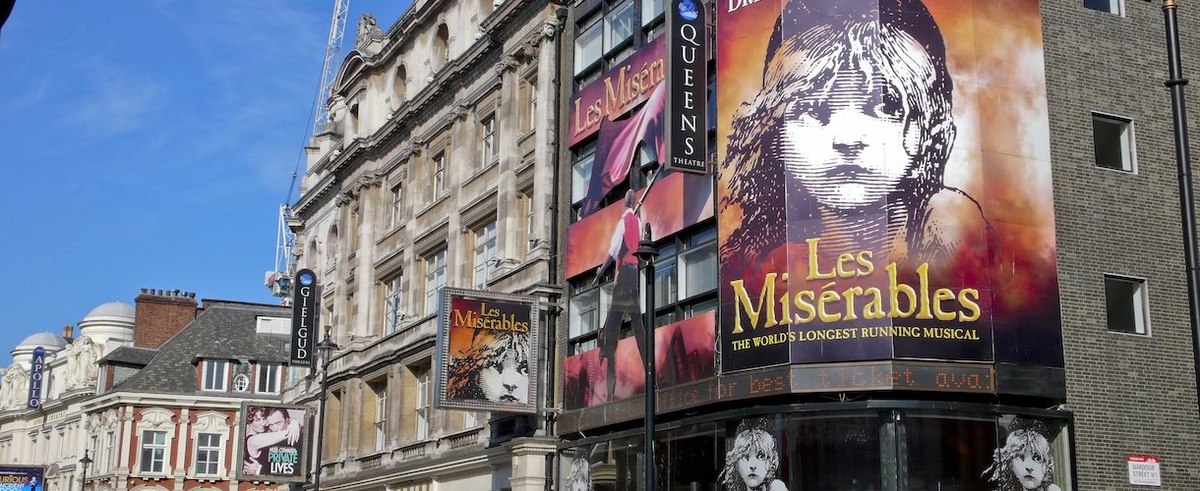

Editor's note: This article was originally published in The Surveyor, YouGov America's email newsletter. It has been revised for publication here. Subscribe to The Surveyor for regular updates on YouGov's polling.
YouGov asked Americans about Les Misérables and 23 other novels set in the past. Specifically, YouGov asked about novels that were set during the French Revolution, American Civil War, or World War II — or that people might mistakenly think were set during those events.
Frankly, my dear, I'm not sure
The most important thing to know when interpreting the results is that lots of Americans aren't sure about the settings of most of these books. Only three of the 24 books have at least 60% of U.S. adult citizens saying either "yes" or "no" about whether they took place in a given historical setting: Uncle Tom's Cabin (60%), The Adventures of Huckleberry Finn (60%), and Gone With the Wind (70%) — in each case, a possible Civil War novel.
This means it's misleading to just compare the share of Americans who said each book was set in a given period. For example, more Americans say Mark Twain's The Adventures of Huckleberry Finn is set during the Civil War than say Michael Shaara's The Killer Angels is (20% vs. 16%), even though Twain's book is set during the 1840s and Shaara's book is about the Battle of Gettysburg. But that's partly because Huck Finn is a much more widely known book: 40% say Huck Finn isn't set in the Civil War and only 18% say so about The Killer Angels.
So instead, we can "re-base" the results: filter out non-responses, and present results for each book not as a share of Americans but as a share of Americans with an opinion. Among Americans with an opinion about each, 49% say The Killer Angels is a Civil War novel, while 36% say the same about The Adventures of Huck Finn.
Because these re-based numbers are the percentage who say "yes" out of only those who say "yes" or "no," you can find the percentage of this group with an opinion who say "no" by subtracting the percentage who say "yes" from 100%.
Trick questions
Americans who have read each of the 24 historical fiction books are generally pretty good at identifying which era they are set in — with a couple of tricky exceptions.
Among those with an opinion about each book, more than two-thirds of book readers correctly identify each of The Scarlet Pimpernel, A Tale of Two Cities, and A Place of Greater Safety as French Revolution books. And majorities of book readers with an opinion correctly say that The Three Musketeers, The Count of Monte Cristo, The Hunchback of Notre Dame, and Pride and Prejudice are not set in the French Revolution.
Likewise, most book readers with opinions correctly say that Gone With the Wind, Cold Mountain, The Killer Angels, and The Red Badge of Courage are Civil War novels, and that The Adventures of Huckleberry Finn and The Grapes of Wrath are not. And majorities of book readers with opinions correctly identify All the Light We Cannot See, Catch-22, Slaughterhouse-Five, and The Naked and the Dead as World War II novels, while saying that A Farewell to Arms and All Quiet on the Western Front are not.
See this chart with results as a share of U.S. adult citizens, including those who are not sure.
Some of the 24 books were intentionally chosen to be tricky. For example, C.S. Lewis's The Lion, the Witch, and the Wardrobe is mostly set in the fantasy realm of Narnia, but its frame story takes place during the London Blitz. Americans who haven't read Lewis's novel predominantly say it isn't set in World War II (30% with an opinion said it is, vs. 70% saying it isn't), but those who have read it are more likely to say it is set in World War II (58% vs. 42%).
Majorities get several other tricky books wrong, even among book readers. Among those with an opinion, 59% of Americans say Uncle Tom's Cabin is set during the Civil War, as do 62% of those who have read Uncle Tom's Cabin. Harriet Beecher Stowe's novel is about slavery, and Abraham Lincoln famously called Stowe "the little lady who started this great war" for the book's impact as an antislavery work. But it was published in 1852, almost a decade before the Civil War began.
Philip K. Dick's novel The Man in the High Castle is about World War II, but it's set after the war in an alternate universe where the Axis powers won the war. Among those with an opinion, 53% of Americans and 66% of those who read the book say it's set during World War II.
One book more
The most likely book of the 24 to confuse both Americans and book readers is Les Misérables. 69% of those with an opinion say it's set during the French Revolution, while 31% correctly say it isn't.
The primary action in Les Misérables begins after the 1815 Battle of Waterloo, when Napoleon was defeated for the last time and France's traditional line of kings were brought back in the "Bourbon Restoration." It climaxes in 1832, when a group of students and workers launch an uprising to try to replace the French monarchy with a republic. That 1832 "June Rebellion" is a separate, and much smaller, event than the 1789 French Revolution.
Americans who have read Les Misérables are slightly more likely to wrongly say it's set during the French Revolution than are those who have not read it (72% of readers with an opinion, vs. 69% of non-readers with opinions).
Americans who say they know a lot about the French Revolution are less likely to get this wrong than are those who know a little bit about the French Revolution. But more than 60% say Les Misérables is set during the French Revolution at all levels of self-described French Revolution knowledge.
See this chart with results as a share of U.S. adult citizens, including those who are not sure.
Methodology: The poll was conducted among 2,172 U.S. adult citizens. Respondents were selected from YouGov’s opt-in panel to be representative of U.S. adult citizens. A random sample (stratified by gender, age, race, education, geographic region, and voter registration) was selected from the 2019 American Community Survey. The sample was weighted according to gender, age, race, education, U.S. region, 2024 presidential vote, 2020 election turnout and presidential vote, baseline party identification, and current voter registration status. 2024 presidential vote, at time of weighting, was estimated to be 48% Harris and 50% Trump. Demographic weighting targets come from the 2019 American Community Survey. Baseline party identification is the respondent’s most recent answer given around November 8, 2024, and is weighted to the estimated distribution at that time (31% Democratic, 32% Republican). The margin of error for the overall sample is approximately 3%.
Image: Getty (Pat_Hastings)
What do you think about the election, American politics in general, and everything else? Have your say, join the YouGov panel, and get paid to share your thoughts. Sign up here.